Quietum Plus Reviews: What This Ear Health Supplement Contains and What the Evidence Supports
By the Healthy Living Center Editorial Team · Updated October 2026
Disclosure: this article contains affiliate links. If you buy through them, we may earn a commission at no extra cost to you. It does not change what we write.
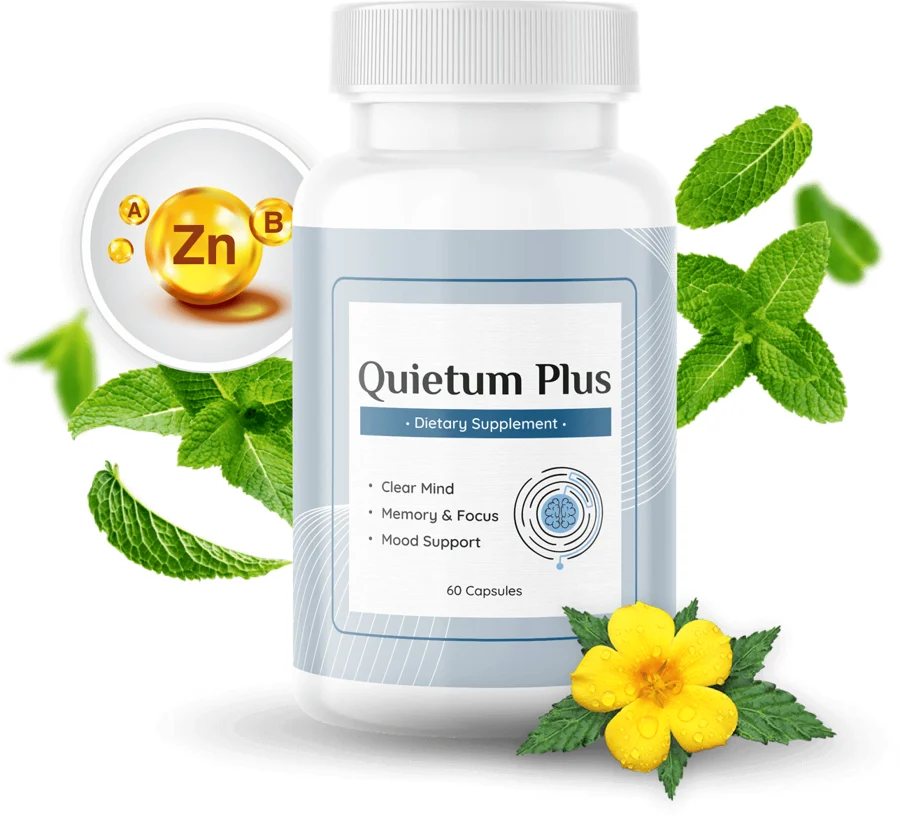
Quietum Plus at a Glance
| Form | Capsules — 60 per bottle; label says 2 a day with water (max 4) |
| Core ingredients | B vitamins, 26 mg zinc, L-arginine, L-tyrosine, black pepper extract + 802 mg blend of 12 herbs (Mucuna, ashwagandha, dong quai, maca, epimedium and more) |
| Made in | Not stated on the label; distributed by Quietum Plus, Aurora, Colorado |
| Guarantee | 60 days from the delivery date |
| Shipping (US) | $9.99 on 2 bottles; free on the 3- and 6-bottle packages |
| Main caution | Contains Mucuna (natural L-dopa), piperine and dong quai — check with a doctor if you take medication; get new or one-sided tinnitus checked first |
Ringing, hissing, buzzing or a faint electrical whine that nobody else can hear: that is how most people describe tinnitus. It is extremely common in adults, especially after years of noise exposure or as hearing changes with age, and for some people it becomes loud enough to disturb sleep and concentration. Because there is no pill that reliably switches it off, the supplement aisle has filled with products that promise quieter ears.
Quietum Plus is one of the longest-running of those products. In this review we look at the actual Supplement Facts panel the brand publishes, explain what each ingredient is and what human research exists, point out where the marketing story outruns the evidence, and summarize the price, shipping and refund terms. We also cover the warning signs that mean you should book a hearing test before buying any supplement.
→ See the Quietum Plus label and current offer on the official website
What Is Quietum Plus?
Quietum Plus is a dietary supplement in capsule form, sold online through its official website and marketed to adults who want support for ear health and a calmer, quieter mind. Each bottle holds 60 capsules. The bottle label itself is labelled "Clear Mind, Memory & Focus, Mood Support" and does not mention hearing or ringing on the front panel; the ear-health positioning comes from the sales page.
The label lists the distributor as Quietum Plus in Aurora, Colorado. The country of manufacture is not printed on the panel we reviewed. In its FAQ, the brand says the capsules come from a facility it describes as accredited by the FDA and tested regularly for safety and quality, but it does not publish a certificate of analysis, a GMP certificate or a facility registration number, so treat that as the company's own statement.
Two regulatory points are worth keeping in mind. First, the FDA does not review dietary supplements for effectiveness before they go on sale; the brand's own FAQ acknowledges this. Second, both the label and the website carry the standard disclaimer that the statements have not been evaluated by the FDA and that the product is not intended to diagnose, treat, cure or prevent any disease.
How Quietum Plus Is Said to Work: Claims vs. Evidence
The sales presentation argues that ear ringing is not really about noise exposure or genetics but about a damaged "wire" carrying signals from the ear to the brain, and that the right nutrients can feed and rebuild it. The ingredient section then attaches brain-related claims to each herb: calming the nervous system, supporting nerve repair, guarding against free radicals and protecting brain cells.
There is a kernel of truth in the brain angle. Hearing researchers do describe chronic tinnitus as something the brain generates, often after the inner ear has lost some of its input, rather than a sound coming from the ear itself. That is why approaches such as sound therapy and cognitive behavioral therapy (CBT) focus on how the brain processes and reacts to the sound.
Where the pitch goes further than the science is the idea that a herbal blend can repair that pathway. Most of the studies listed on the official references page are laboratory or animal experiments on individual herbs, many of them about Parkinson's disease, Alzheimer's models or anxiety, not human trials in people with tinnitus. A few links point to news stories about unrelated drug research. We found no published clinical trial of the finished Quietum Plus formula, and the 2014 clinical practice guideline from the American Academy of Otolaryngology–Head and Neck Surgery advises clinicians against recommending dietary supplements for persistent, bothersome tinnitus because good evidence is lacking.
Why Some Reviews List Different Ingredients
If you read other Quietum Plus reviews, you may see a completely different formula: yam, fenugreek, black cohosh, red clover, Pacific kelp, motherwort and blessed thistle. That list belongs to an older version of the product. The Supplement Facts panel currently shown on the official references page lists a different set of herbs, amino acids, B vitamins and zinc, described below. Always go by the label on the bottle you receive, and if anything differs from what you expected, ask support before opening it.
Quietum Plus Ingredients and What the Research Says
Unlike many products in this niche, Quietum Plus publishes a full Supplement Facts panel. A serving is 2 capsules, and each bottle provides 30 servings. The vitamins, zinc and amino acids are listed with exact amounts; the twelve herbs sit inside an 802 mg proprietary blend, so their individual doses are not disclosed. The sales page refers to "18 plant extracts", while the label names twelve botanicals in the blend plus black pepper extract, so confirm the count on your bottle.
| Listed per 2-capsule serving | Amount on the label |
|---|---|
| Vitamin A (as beta-carotene) | 50 mcg RAE (6% DV) |
| Vitamin B1 (thiamine) | 1.25 mg (104% DV) |
| Vitamin B3 (niacin) | 1 mg NE (6% DV) |
| Vitamin B5 (pantothenic acid) | 2.5 mg (50% DV) |
| Vitamin B6 | 3.8 mg (224% DV) |
| Vitamin B12 | 54 mcg (2,250% DV) |
| Zinc (as zinc oxide) | 26 mg (236% DV) |
| L-arginine / L-tyrosine | 100 mg each |
| BioPerine (black pepper extract) | 500 mcg |
| Proprietary herbal blend | 802 mg total — epimedium, tribulus, catuaba, dong quai, damiana, ashwagandha, ginger, maca, muira puama, mucuna, asparagus, sarsaparilla |
1. Zinc
Zinc is an essential mineral involved in immune function and found in high concentrations in parts of the inner ear, which is why it has long been tested for tinnitus. The best summary of that work, a Cochrane review, found no evidence that oral zinc improves tinnitus in adults. At 26 mg per serving, Quietum Plus supplies more than twice the daily value; the NIH sets the adult upper limit at 40 mg a day from all sources, so check any multivitamin or cold lozenges you already take. Long-term high zinc intake can lower copper levels.
2. B Vitamins (B1, B3, B5, B6, B12)
B vitamins support nerve function and energy metabolism. Vitamin B12 is the one with any tinnitus-specific data: small studies have looked at people who were deficient in B12, with a pilot trial in India reporting some improvement after injections. There is little reason to expect a benefit if your levels are already normal. Vitamin B6 at 3.8 mg is well below the 100 mg adult upper limit, but people who stack several products containing B6 should keep an eye on the total, since high long-term intake can cause nerve symptoms.
3. Mucuna Pruriens
Mucuna seeds naturally contain levodopa (L-dopa), the same compound used to treat Parkinson's disease, and small clinical studies have tested Mucuna in that setting. The sales page links tinnitus to dopamine, but that idea comes largely from a hypothesis paper rather than clinical trials. The practical point is safety: an ingredient that supplies L-dopa is not something to combine casually with Parkinson's drugs, MAO inhibitors, some antidepressants or blood pressure medication. The label does not say how much Mucuna, or how much L-dopa, each serving contains.
4. Ashwagandha
Ashwagandha is an Ayurvedic root studied mostly for stress, anxiety and sleep, with several small randomized trials suggesting modest short-term benefits. That could matter indirectly, since stress and poor sleep tend to make tinnitus feel louder, but no trial has tested it for tinnitus itself. The NCCIH notes rare reports of liver injury, possible effects on thyroid hormone levels, and advises against use during pregnancy.
5. Dong Quai
Dong quai (Angelica sinensis) is a root used in traditional Chinese medicine, mostly for women's health. The sales page calls it an ear tonic; the cited support is animal work, including a 1998 study in hearing-impaired rats. Human evidence for hearing is absent. Dong quai may increase bleeding risk with warfarin and similar drugs, and it is generally avoided in pregnancy and in hormone-sensitive conditions.
6. Epimedium and Tribulus Terrestris
Epimedium (horny goat weed) and tribulus are best known as libido and vitality herbs. Epimedium's main compound, icariin, has shown neuroprotective effects in animal models, and tribulus has been tested in rodent models of Parkinson's disease. Neither has human evidence for hearing or tinnitus. Tribulus may have hormonal effects, which is one more reason to check with a doctor if you have a hormone-sensitive condition.
7. Catuaba, Muira Puama and Damiana
These three are traditional Latin American botanicals, again more familiar from men's vitality products than from ear health. Lab and animal studies describe antioxidant and enzyme-related effects on the nervous system, and muira puama has been studied in mice for memory. Human trials related to hearing are not available, and doses inside the blend are not stated.
8. Maca Root and Ginger
Maca is a Peruvian root vegetable studied in small human trials for mood, energy and sexual desire, with generally good tolerability. Ginger is a familiar spice with solid evidence for nausea; the brain-related studies cited on the official page are early research. Ginger may add to the effect of blood thinners at high doses, although the amount here is unknown and probably small within an 802 mg blend shared by twelve herbs.
9. Asparagus and Sarsaparilla
Asparagus stem extract and sarsaparilla root (listed on the label as Smilax china) appear on the references page through cell and rodent studies of memory and nerve protection. There is no human hearing research to evaluate.
10. L-Tyrosine and L-Arginine
L-tyrosine is an amino acid the body uses to make dopamine and noradrenaline; L-arginine is a building block for nitric oxide, which helps blood vessels relax. At 100 mg each these doses are small compared with the grams used in most studies. Neither has meaningful tinnitus evidence. Tyrosine is usually avoided with MAO inhibitors and needs care with thyroid medication; arginine can lower blood pressure slightly.
11. BioPerine (Black Pepper Extract)
Piperine is included to improve absorption. The catch is that it can also raise blood levels of some prescription drugs by slowing how the body breaks them down, so it is worth showing the label to your pharmacist if you take regular medication.
Bottom line on the formula: the published panel is more transparent than most, but the blend reads like a mood, energy and vitality stack with B vitamins and zinc added, rather than a formula built on hearing research. The ingredients with any tinnitus data (zinc and B12) have either negative or deficiency-only evidence.
Prefer a product that publishes its full label? Check the current Quietum Plus packages on the official site.
Visit the Official Quietum Plus Website →Pros and Cons of Quietum Plus
Pros
- Full Supplement Facts panel published on the official website
- Simple routine: 2 capsules a day, 60 capsules per bottle
- Stimulant-free, non-GMO and gluten-free according to the brand
- One-time payment with no subscription, per the official FAQ
- 60-day refund window counted from the delivery date
Cons
- No clinical trial of the finished formula
- Herbal doses hidden inside an 802 mg proprietary blend
- Mostly vitality and mood herbs, not ingredients studied for hearing
- Mucuna (L-dopa), piperine and dong quai create real interaction concerns
- Return postage is paid by the customer, and the lowest price requires a six-bottle order
Who Might Consider Quietum Plus (and Who Should Not)
Quietum Plus may appeal to adults who:
- have long-standing tinnitus that has already been checked by a doctor or audiologist
- are interested in a stress, sleep and mood-oriented formula alongside proven tinnitus management
- take no regular medication that could interact with the herbs listed above
- accept that results are uncertain and will judge it fairly within the refund window
It is not a good fit, or needs a doctor's approval first, if you:
- are pregnant, breastfeeding or under 18 (the label itself says adult use only)
- take Parkinson's medication, MAO inhibitors or other antidepressants
- take warfarin or other blood thinners, or have surgery coming up
- have a thyroid condition, liver disease or a hormone-sensitive condition
- already take zinc or a high-dose multivitamin that would push you past 40 mg of zinc a day
When to See an Audiologist or Doctor First
Tinnitus is a symptom, not a diagnosis, and a supplement should never be the first step. The National Institute on Deafness and Other Communication Disorders (NIDCD) recommends starting with a medical and hearing evaluation. Get checked promptly if you notice any of the following:
- Sudden hearing loss in one or both ears — this is time-sensitive; see a doctor or emergency care within a day or two, because early treatment improves the chance of recovery
- ringing in only one ear, or noise that pulses in time with your heartbeat
- tinnitus together with dizziness, vertigo, balance problems or facial weakness
- ear pain, discharge, a feeling of fullness, or symptoms after a head injury
- tinnitus that started after a new medication
- ringing that causes anxiety, low mood or trouble sleeping
An audiologist can measure your hearing and look for problems that are easy to fix, such as earwax buildup. If hearing loss is found, properly fitted hearing aids often make tinnitus less noticeable, and CBT has the strongest evidence for reducing how distressing tinnitus feels. Those are the steps the clinical guideline recommends.
Safety and Side Effects
No serious side effects have been publicly reported for Quietum Plus as a finished product, and the label carries the usual cautions: do not exceed the recommended dose, adults only, and consult a physician if you are pregnant, nursing or have a medical condition. With a twelve-herb blend, mild effects such as stomach upset, headache or changes in sleep are possible, especially in the first weeks.
The more important issues are interactions. Mucuna supplies L-dopa; tyrosine feeds the same dopamine pathway; piperine can change how drugs are absorbed and broken down; dong quai and ginger may affect bleeding; ashwagandha can influence thyroid levels and has rare liver case reports; and the zinc dose is substantial. If you take any prescription medicine, bring the label to your doctor or pharmacist before the first capsule. Stop the product and seek care if you develop unusual bruising, palpitations, yellowing of the skin or eyes, or new neurological symptoms.
How to Use Quietum Plus
The bottle label says to take two capsules daily with water, not to exceed four capsules a day, and to use the product for at least eight weeks. The FAQ on the official site adds more detail: one capsule twice a day, 10 to 15 minutes before a meal, for example before breakfast and before an afternoon or evening meal. The label also recommends light exercise and a sensible diet.
To judge it fairly, rate your tinnitus loudness and how much it bothers you on a simple 0-to-10 scale once a week, and note your sleep. Change one thing at a time. Because the refund window is 60 days from delivery and the brand suggests 8 to 12 weeks of use, set a reminder before day 60 so you can decide while a refund is still possible.
Quietum Plus Price, Shipping and Guarantee
Quietum Plus is sold in three packages on the official order page. The crossed-out "regular" totals shown next to them are reference prices set by the seller. When we checked in October 2026, the page showed:
| Package | What the official order page states |
|---|---|
| 2 bottles (60-day supply) | $158 total ($79 per bottle) + $9.99 shipping |
| 3 bottles (2 + 1) | $207 total ($69 per bottle), free US shipping |
| 6 bottles (3 + 3) | $294 total ($49 per bottle), free US shipping |
| Bonuses | Three digital guides (hearing tips, sleep, vertigo/balance) with the 6-bottle order |
| US delivery | 5 to 7 working days; tracking email within 60 hours |
| Canada, UK, Ireland, Australia, NZ | $15.95 shipping, 10 to 15 working days |
| Billing | One-time payment, no subscription (per the official FAQ) |
| Guarantee | 60 days from the delivery date |
One inconsistency is worth noting: the shipping policy table lists US delivery as free, while the two-bottle package shows a $9.99 shipping charge. Confirm the final total at checkout before paying.
Refund Policy: What the Terms Actually Say
The official refund page gives you 60 days starting from the day the order is delivered, which you can confirm with your tracking number. To request a refund, you email product support with "Refund Request" in the subject line, then send back all bottles — opened, unopened or empty — together with the packing slip and a note with your name, email and order ID, to the return address in Aurora, Colorado listed on that page.
The policy states that return shipping is paid by the customer and that the refund is processed within about 5 to 10 days after the package arrives, with extra time for your bank to post it. Whether the original shipping fee on the two-bottle order is refunded is not stated, so ask support in writing. Use a tracked shipping method for the return and keep the receipt.
→ Check today's Quietum Plus price and packages on the official website
What We Saw on the Official Quietum Plus Order Page (October 12, 2026)
On October 12, 2026 we opened the official order page ourselves and followed the checkout up to the payment step, without placing an order, to record exactly what a buyer sees. The screenshots below are unedited crops from that visit.

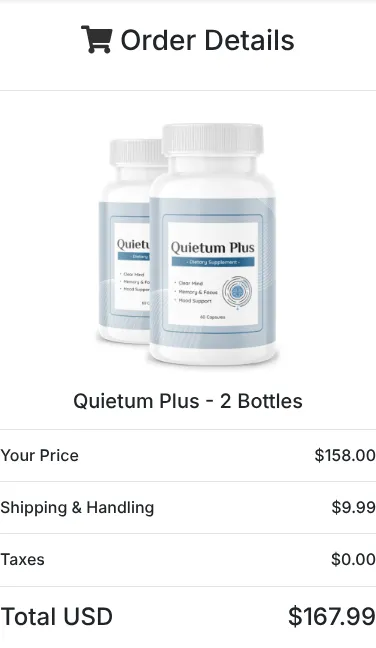
- The order page offered 2 bottles at $79, 2 + 1 bottles at $69 and 3 + 3 bottles at $49 per bottle.
- The 2-bottle checkout showed $158.00 plus $9.99 shipping and handling, $167.99 total. The 2 + 1 bundle came to $207.00 and the 3 + 3 bundle to $294.00, both with $0.00 shipping.
- The refund page counts the 60 days from the day the package is delivered. Contact address listed: contact@quietumplus.com.
Where to Buy Quietum Plus
The brand says Quietum Plus is sold only through its official website and warns that listings elsewhere may not be genuine. Marketplace or third-party listings are also unlikely to be covered by the 60-day refund policy. Buying from the official order page is the most reliable way to get the current formula and a refund route you can actually use.
Quietum Plus vs. Other Tinnitus Options
It helps to see where a supplement fits. Hearing aids and sound therapy (background sound, sound generators) are recommended by the clinical guideline for people with hearing loss and bothersome tinnitus. CBT has the best evidence for reducing distress, according to a Cochrane review. Among supplements, ginkgo biloba is the most studied, and a Cochrane review found no convincing benefit for tinnitus; zinc and melatonin have not performed much better. Quietum Plus takes a different route with mood and vitality herbs, but it has no trials of its own. If you try it, treat it as an add-on to, not a replacement for, the steps above.
Final Verdict
Quietum Plus deserves credit for publishing a full label with exact vitamin, zinc and amino acid amounts, for a straightforward one-time purchase, and for a refund window that starts on the delivery date. Some of its ingredients, ashwagandha in particular, have reasonable evidence for stress and sleep, which can influence how intrusive tinnitus feels.
The limitations are just as clear. The herbal doses are hidden in a proprietary blend, the formula is built mainly from vitality and mood herbs rather than hearing research, the marketing leans on animal studies and news articles, and ingredients such as Mucuna, piperine and dong quai bring genuine interaction risks. If your tinnitus has already been evaluated, you take no interacting medication and you want to try a supplement under a 60-day guarantee, Quietum Plus is an option to consider with modest expectations. If your symptoms are new, one-sided, pulsing or come with hearing loss or dizziness, see a doctor or audiologist first.
Frequently Asked Questions (FAQs)
Has the FDA reviewed Quietum Plus?
No. The FDA does not review dietary supplements for effectiveness before they are sold, and the label states that its claims have not been evaluated by the FDA. The brand says it uses a facility it describes as FDA-accredited, but no certificate is published.
What is in Quietum Plus?
Per the label, each 2-capsule serving has vitamins A, B1, B3, B5, B6 and B12, 26 mg of zinc, 100 mg each of L-arginine and L-tyrosine, black pepper extract, and an 802 mg blend of twelve herbs including Mucuna, ashwagandha, dong quai, maca and epimedium.
How do I take Quietum Plus and how long until I notice anything?
The label says two capsules a day with water for at least eight weeks; the FAQ suggests one capsule twice daily before meals. The brand mentions 9 to 12 weeks. Remember the refund window closes 60 days after delivery.
Can Quietum Plus stop tinnitus?
There is no clinical trial showing that it does, and no supplement is recommended for tinnitus in the US clinical guideline. Hearing evaluation, hearing aids when there is hearing loss, sound therapy and CBT have the best support.
Is Quietum Plus safe with my medication?
Ask your doctor or pharmacist first. Mucuna contains L-dopa, piperine can change drug absorption, and dong quai may increase bleeding risk with blood thinners.
What is the Quietum Plus refund policy?
You have 60 days from delivery. Email support with "Refund Request" in the subject and return all bottles, even empty, with the packing slip. Return postage is your cost.
Want to compare the current Quietum Plus packages? The official site lists today's prices.
Visit the Official Quietum Plus Website →References
- Tunkel DE, et al. Clinical practice guideline: tinnitus. Otolaryngol Head Neck Surg. 2014;151(2 Suppl):S1-S40.
- Person OC, et al. Zinc supplementation for tinnitus. Cochrane Database Syst Rev. 2016;(11):CD009832.
- Hilton MP, Zimmermann EF, Hunt WT. Ginkgo biloba for tinnitus. Cochrane Database Syst Rev. 2013;(3):CD003852.
- Fuller T, et al. Cognitive behavioural therapy for tinnitus. Cochrane Database Syst Rev. 2020;(1):CD012614.
- Chandrasekhar SS, et al. Clinical practice guideline: sudden hearing loss (update). Otolaryngol Head Neck Surg. 2019;161(1 Suppl):S1-S45.
- Singh C, et al. Therapeutic role of vitamin B12 in patients of chronic tinnitus: a pilot study. Noise Health. 2016;18(81):93-97.
- Katzenschlager R, et al. Mucuna pruriens in Parkinson's disease: a double blind clinical and pharmacological study. J Neurol Neurosurg Psychiatry. 2004;75(12):1672-1677.
- National Institute on Deafness and Other Communication Disorders (NIDCD). Tinnitus.
- NIH Office of Dietary Supplements. Zinc — Fact Sheet for Health Professionals.
- NIH Office of Dietary Supplements. Vitamin B6 — Fact Sheet for Health Professionals.
- National Center for Complementary and Integrative Health (NCCIH). Ashwagandha.
- National Center for Complementary and Integrative Health (NCCIH). Dong Quai.
This review is for general information only and is not medical advice. Product details (ingredients, prices, guarantee) come from the official Quietum Plus pages as checked in October 2026; they can change, so confirm them at checkout. Talk to your doctor before starting any supplement, especially if you take prescription medication or have a health condition.